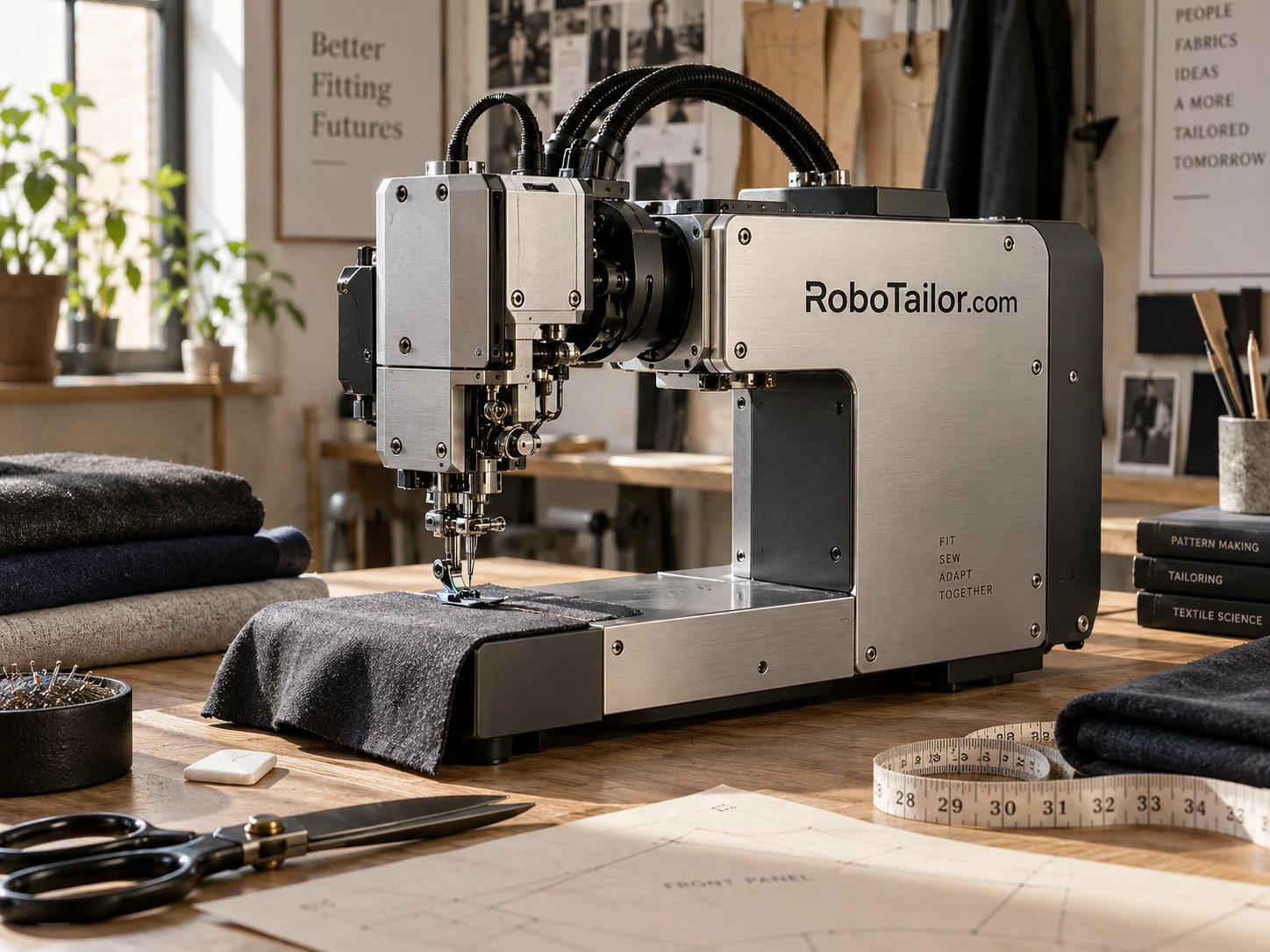
A product team selling apparel automation needs to tell a technical buyer exactly what arrives, what it connects to and what work it can perform. RoboTailor.com could serve as the main name for a hardware and software platform aimed at selected tailoring operations. The opportunity is a clear category introduction followed by enough detail to support an engineering evaluation.
This illustrative concept starts with an apparel development or production team that already has a defined operation to improve. The first buyer should be able to supply representative pieces, describe the current workflow and identify the person responsible for acceptance. A general interest in robots is not yet a usable product requirement.
Choose one operation as the entry point
The first offer could be a cell designed around one supported seam or material-handling task. Specify the sample geometry, material range, loading method and output inspection. A platform can expand later; its first product needs a boundary that a buyer can evaluate without guessing which parts remain experimental.
Avoid bundling every possible task into the word “tailoring.” Pattern adjustment, cutting, seam alignment, stitching and fitting feedback are separate activities. A team might build an excellent tool for one of them and integrate with existing tools for the others. The product description should make those relationships visible from the beginning.
The name suits a platform when the product family remains connected to garment work. If the first tool is a narrowly focused sewing cell, use a descriptive product name underneath RoboTailor.com. A buyer should be able to distinguish the company-level name from the exact system being evaluated.
Module one: job preparation
A job preparation module would translate an approved operation into instructions the system can use. It might capture a pattern reference, material identification, supported seam path and setup requirements. The important feature is traceability: an operator should know which instruction version belongs to the physical pieces on the table.
A revision must have an owner. If a pattern changes after a sample is approved, the interface should make that difference visible before the next run. Quietly replacing a file under the same name makes later inspection harder. The product team needs to decide how revisions are approved, stored and recalled during troubleshooting.
The first release does not need a complex dashboard. A clear job card, reliable validation and understandable error messages may be more useful. Technical buyers should see a sample of those records during evaluation, along with an explanation of what information remains in their existing production system.
Module two: controlled execution
The execution module would coordinate the supported machine operation and present its state to the operator. Define what the operator loads, what must be checked before starting and what happens when the run stops. A restart should follow a documented recovery procedure developed for that equipment, rather than rely on an improvised button sequence.
Apparel materials make the demonstration conditions especially relevant. A research paper on robotic apparel automation describes fabric handling and sewing with a collaborative robot setup. It is research evidence about an approach, not proof of a commercial product’s readiness. A prospective platform needs to demonstrate its own capabilities with the buyer’s representative materials.
Ask for runs that include ordinary variation and explain unsuccessful attempts. An edited success clip can introduce the mechanism. It cannot establish reliability across a production mix. Keep the test record tied to material, geometry, equipment configuration and operator intervention so the result remains interpretable.
Module three: inspection and feedback
The inspection module would associate output checks with a specific job revision. Some checks may be visual and performed by a person. Others may be supported by sensors. Label the method and the measured property, rather than collapsing them into a general “quality score” that nobody can explain.
When a piece fails, the record should help someone decide what happens next. It could be reworked manually, rerun after review or removed from the batch. The software should preserve the original result as well as the later action. Deleting failures from a demonstration record makes it impossible to learn where the product boundary really lies.
Feedback from fitting belongs in a different category from evidence that a seam followed its intended path. A garment can be assembled as specified and still fail to satisfy a customer. Keep construction inspection and fit preference distinct when building the data model.
A first evaluation package
Consider an apparel team with a repeated seam on a stable pattern. The evaluation package includes its sample pieces, the current preparation steps, acceptance criteria and a list of expected variants. The supplier and buyer agree which tasks the demonstration includes before comparing results with the existing method.
Run the ordinary case, a planned variant and a recoverable interruption. Record preparation time and human assistance as well as the machine cycle. At the end, provide the results and unresolved issues in a form the buyer’s engineering and production staff can review together. A useful evaluation can conclude that the product is appropriate for only part of the proposed work.
Reach the technical buyer
A credible distribution path is a focused demonstration program with apparel equipment integrators or production engineering teams. Offer a sample submission brief and a clear evaluation scope. Those materials help a prospect decide whether a technical conversation is worth scheduling.
Execution requires engineering, equipment-specific safety review, integration support and a plan for maintaining installed systems. The domain provides a public home for that offer; it does not supply those capabilities. An acquisition inquiry should describe the product shape, first supported operation and intended buyer. A partnership proposal should also explain the engineering contribution and who would own customer support.