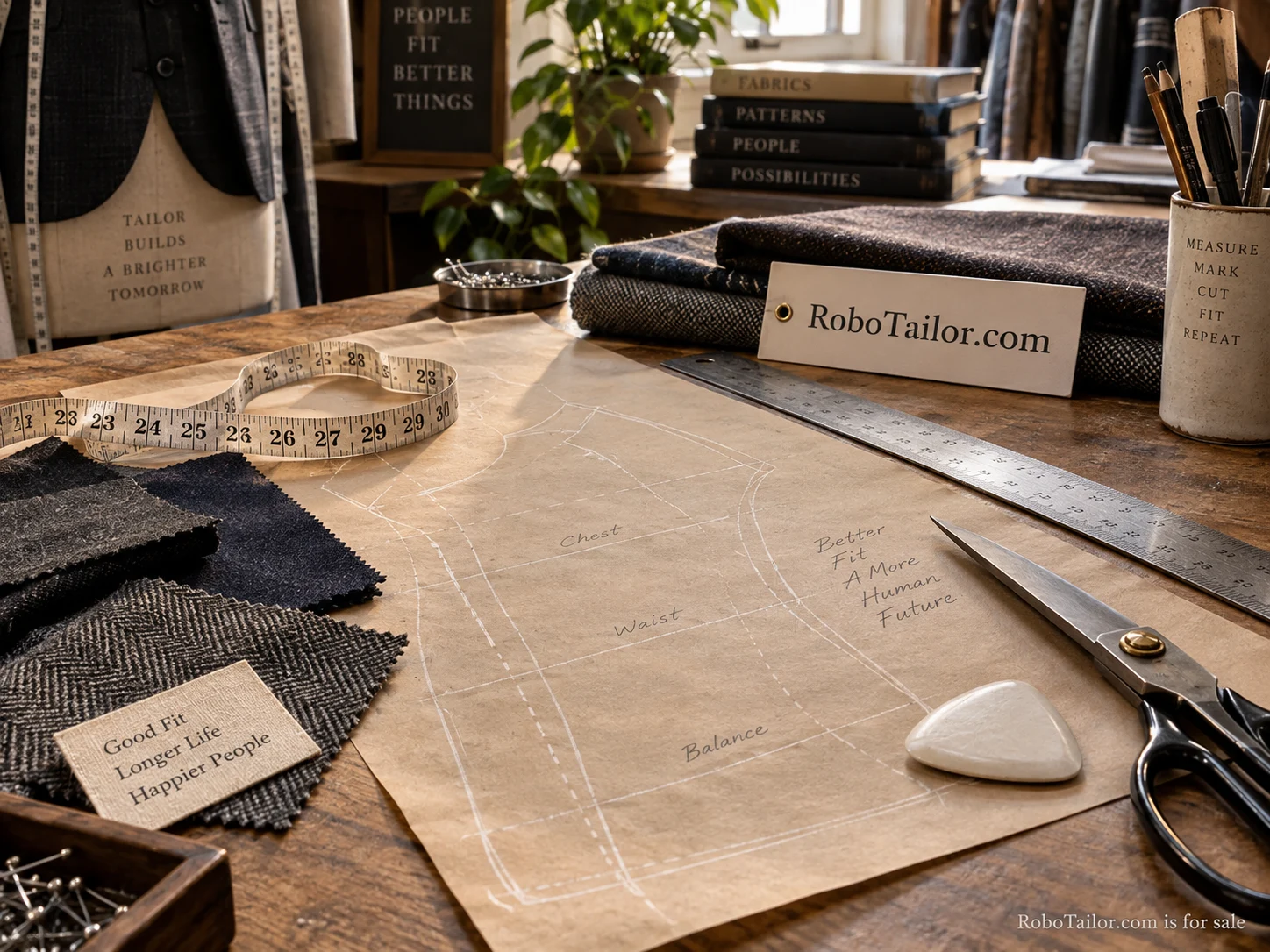
A body measurement is an observation taken under particular conditions. A pattern is a set of construction instructions. A comfortable garment is an outcome that also depends on material, shape, movement and preference. Treating those three things as interchangeable makes a fitting service harder to explain and harder to improve.
A useful fit record preserves the distinction. It says what was measured, how the information was obtained, what the customer requested and which garment was made. This guide proposes a practical record structure for apparel teams. It does not certify a sizing method or provide a medical assessment.
Keep three layers of information
The first layer contains body measurements and the conditions under which they were taken. Use named measurements, units, a date and the method. When information comes from the customer, make that source visible. A self-reported dimension and a measurement taken during an appointment may need different follow-up before they guide a pattern change.
The second layer describes the garment. Record finished dimensions, pattern revision, material and construction choices where relevant. Do not label a garment dimension as a body measurement simply because both use centimeters. The difference between the two may be intentional and may vary with the design.
The third layer captures preference. A customer may like a relaxed waist, a close sleeve or extra room for reaching. Those wishes deserve their own fields or clear notes. They should not be hidden inside altered body measurements, where another fitter could mistake a comfort choice for an observation about the body.
Agree on measurement vocabulary
A measurement name should mean the same thing to everyone handling the order. If two people interpret a label differently, an apparently precise number will not resolve the disagreement. Define landmarks and method in staff guidance, and keep customer instructions clear enough to follow.
ISO 8559-1 provides anthropometric definitions for clothing-related body measurements. It can inform a shared vocabulary. A reference to that document should not be presented as a certification of a brand, scanner or finished garment. The business must still establish how its own measurements lead to patterns and customer support.
When a new measurement method is introduced, preserve the method identifier in the record. Otherwise differences caused by a changed process can look like changes in the customer. Keep the old observation available for authorized review, and make the currently approved value easy to identify. A quiet overwrite removes context that may later explain a poor result.
Treat scan output as input to a process
A body scan may supply measurements or a shape representation. The product description should state what the system actually produces and how the business uses it. Avoid making the word “scan” carry an implied guarantee of comfort or a complete replacement for fitting judgment.
If a reading is incomplete or questionable, provide a review path. That might involve repeating the measurement, checking it manually or asking the customer for clarification. The team needs a documented reason for proceeding, not an assumption that a digital number must be right because it has decimal places.
Show uncertainty in a way staff can act on. A field marked “confirm at fitting” is often more useful than a colorful confidence graphic with no defined meaning. If a confidence score is used, explain what it measures, how it was evaluated and what decision it supports. Do not allow it to become an unsupported overall “fit score.”
Build a record that survives a reorder
Consider a shirt order. The record contains the measured sleeve reference, the requested finished sleeve length, a note about cuff preference, the pattern revision and the fabric. At collection, the customer requests a small change after moving their arms. Staff record the revised garment instruction and the reason for it.
On a reorder, the team asks whether the customer wants the same result and whether the relevant circumstances have changed. If the new shirt uses a different material or construction, the business can review the instruction before repeating it. The original measurement remains useful history, but it does not automatically settle every future decision.
A practical ticket might contain the following fields: observation date, measurement method, units, pattern revision, finished dimensions, preference notes, approval status and adjustment history. Each field should have an owner. If nobody is responsible for updating an approval status, that field will eventually mislead the next person in the workflow.
Make public claims match the service
“Perfect fit from one scan” leaves little room for the ordinary work of interpretation and adjustment. A more specific statement might say, “The appointment records measurements used to prepare the first fitting.” That sentence tells the customer what happens and leaves the fitting service visible.
Another example: replace “Your exact size forever” with a description of stored preferences and the circumstances that require review. The goal is not timid writing. It is a promise a staff member can explain when the customer asks what happens if a garment needs a change.
A good claim review asks four questions. What is the output? Under what conditions was it evaluated? Which customer action follows? What happens when the result is unsuitable? If the page cannot answer those questions, a more impressive adjective will not repair the missing service definition.
Collect information for a named purpose
Before adding a field, identify the decision it supports. A preferred sleeve length may help prepare a shirt. A detailed body image raises different storage and access questions. Do not collect the more detailed record merely because the tool makes it possible. The operating team should understand why each category is needed.
Explain the collection purpose to the customer and review the applicable privacy requirements before launch. Assign access according to staff responsibilities. A person scheduling a collection appointment may need contact details and order status, while a fitter needs the relevant measurement history. A machine job card can often use an order reference instead of a full customer profile.
Also decide what happens when information is corrected or no longer needed. A policy written after years of accumulation is harder to implement than a record design with clear ownership from the start. Specific retention periods and rights procedures require review for the business and its customers; they should not be improvised from a generic product template.
Use adjustments as structured feedback
An adjustment record should identify what changed and why. “Too tight” is a useful customer expression, but the internal follow-up needs more context: where, during which movement and against which garment revision. Keep the customer’s language alongside the fitter’s instruction so the original concern remains understandable.
Look for recurring patterns without treating every adjustment as proof of a measurement failure. The issue might involve a pattern, fabric behavior, construction variation or preference that was not discussed. Categorizing the reason helps a team decide whether to revise instructions, retrain staff or change the product offering.
The next useful action is small. Take one current product-page fit claim and connect it to the actual customer record and support process. Rewrite the claim until it describes an observable step or supported outcome. Then ask a fitter and a customer-facing colleague whether it matches what they can deliver. Their answer is more valuable than another layer of visual precision.